Blog
How Can Ui Ux Testing Reveal Hidden Website Problems?
Every website is designed with a specific purpose in mind, whether that is to share helpful information, showcase creative portfolios, or facilitate online transactions. Designers and developers spend countless hours refining every single page to ensure it
Read More
Latest from our resources

Common Customer Journey Testing Mistakes and How to Avoid Them
Running a customer journey study is only half the work how it’s designed, who it’s tested on, and what happens with the …

How to Test Every Stage of the Customer Journey Effectively
Most journey testing effort clusters around one or two stages usually the homepage and the checkout or signup page simply because they’re …
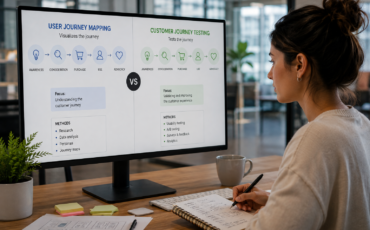
Customer Journey Testing vs User Journey Mapping: What’s the Difference?
“Journey mapping” and “journey testing” get used as if they’re the same activity, and in most team conversations, they’re not distinguished at …

Why Customer Journey Testing Matters for Better User Experience
A team can review a website internally a dozen times, agree it looks clean and functions correctly, and still be completely wrong …

What Is a Customer Journey Map, Really And Why Most B2B Teams Get It Wrong
Ask five people on a B2B marketing or product team to draw their customer’s journey, and you’ll usually get five different diagrams …

From Gaze to Insights: How Eye Tracking AI Supports Smarter Consumer Research
On its own, eye tracking data is just coordinates and timestamps a record of where a pair of eyes moved, with no …
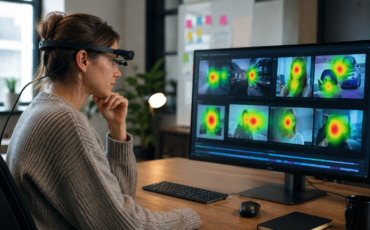
Eye Tracking AI for Video and Creative Testing: Understanding Viewer Attention Frame by Frame
Static creative is tested in a single glance. Video isn’t attention shifts constantly as a scene changes, a cut happens, or a …

How Eye Tracking AI Helps Brands Optimise Website and App Experiences
Most website and app redesigns are guided by best practices, internal opinion, and occasionally A/B test results after the fact. What they’re …
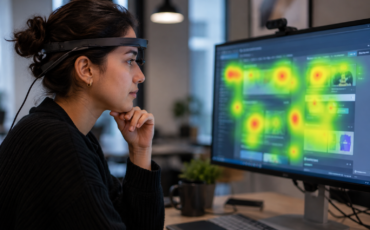
Eye Tracking AI for Product Packaging Research: What Shoppers Look at First
A shelf, physical or digital, gives a product about two to three seconds to earn a shopper’s attention before their eyes move …