
Eye Tracking AI for Product Packaging Research: What Shoppers Look at First
A shelf, physical or digital, gives a product about two to three seconds to earn a shopper’s attention before their eyes move on. In that window, design hierarchy isn’t a matter of opinion it’s a matter of what the eye actually catches first. Eye tracking AI gives packaging and brand teams a direct, evidence-based answer to that question, showing precisely which element on a pack wins that first glance, and which ones go completely unnoticed.
Why First Glance Matters So Much in Packaging
Shelf environments are crowded by design dozens of products compete for the same narrow strip of visual attention. In that setting, a shopper’s eyes don’t methodically scan every element of a pack in order; they jump to whatever pulls attention fastest, usually driven by color contrast, shape, faces, or bold typography, well before any conscious “reading” of the pack begins.
This means the single most important design question for packaging isn’t “does this look good,” but “does this earn attention in the first second, and does it earn it on the right element.” Eye tracking AI is built to answer exactly that.
It’s also a question internal design reviews are poorly suited to answer on their own. A pack design that looks compelling on a large monitor, viewed in isolation and with full attention, behaves very differently once it’s reduced to shelf scale and placed among a dozen competing products fighting for the same glance. Eye tracking AI closes that gap by testing the design under conditions that actually resemble how it will be encountered by a real shopper.
This article is part of a broader series for the full picture of how eye tracking AI works across market research, see the complete guide to eye tracking AI in market research.
What Eye Tracking AI Reveals on a Pack
Applied to packaging research, eye tracking AI typically surfaces a handful of clear, actionable outputs:
- First fixation point — the exact element (logo, color block, product image, claim) that catches attention first
- Attention heatmaps — a visual map of where gaze concentrated across the full pack design
- Dwell time by element — how long attention lingered on the brand name versus a claim versus the product image
- Comparative attention across pack variants — useful when testing multiple design directions side by side
- Missed elements — text or design features that exist on the pack but received little or no visual attention at all
For brand and design teams, the “missed elements” output is often the most eye-opening it’s common for a claim the team considers central to the product story to receive almost no attention at all, simply because it’s positioned or styled in a way that doesn’t compete visually with the rest of the pack. This gap between internal importance and actual shopper attention tends to be invisible until it’s measured directly, since design teams naturally know where every element on a pack is and why it matters, which makes it difficult to view the design the way a first-time shopper, scanning quickly and without that context, actually does.
Comparing Multiple Pack Designs Objectively
One of the most practical uses of eye tracking AI in packaging research is head-to-head design comparison. When a brand is deciding between two or three pack directions, gaze data provides an objective basis for comparison which version earns faster attention on the logo, which draws eyes to the product benefit fastest, which risks losing attention to secondary elements like a competitor callout or a busy background pattern.
This kind of comparative testing sits alongside broader creative testing methodologies, where visual and messaging variants are evaluated systematically rather than through internal preference alone.
Beyond Attention: Understanding the Emotional First Impression
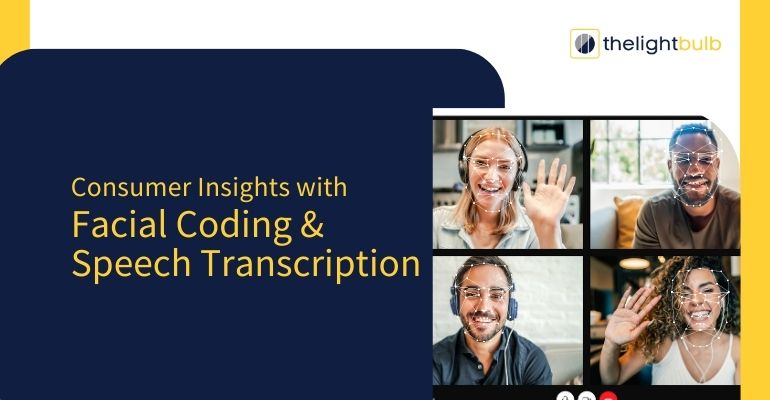
Winning attention is only the first step the design still needs to create the right impression once it’s seen. Layering emotion AI and facial coding onto packaging eye tracking studies shows whether that first glance is followed by a positive reaction, hesitation, or confusion, giving brand teams a fuller read on whether a design choice is working the way it’s intended to not just noticed, but well received.
What Strong vs. Weak Attention Patterns Look Like on a Pack
Not every attention pattern signals success, and learning to read the difference is central to using packaging eye tracking data well.
A strong pattern usually shows fast first fixation on the brand or product itself, with secondary elements a key claim, a flavor or variant callout, certification marks each earning a meaningful, if smaller, share of attention. Gaze data typically shows a clear, deliberate path across the pack rather than scattered, directionless movement.
A weak pattern often shows attention concentrating disproportionately on a single, less important element a bright but non-essential graphic, a border, or background pattern while the brand name or hero claim goes largely unfixated. In shelf-comparison tests, a weak pattern can also show a design’s attention share shrinking sharply once placed next to more visually assertive competitors, even if the design tested well in isolation.
As with ad testing, these patterns need to be read against the specific packaging objective. A premium brand prioritizing subtlety over shelf shout will have a different “successful” attention pattern than a mass-market brand competing primarily on stand-out visibility the data should inform that strategy, not override it.
How a Packaging Eye Tracking Study Typically Runs
Running an eye tracking study on packaging follows a fairly consistent process:
- Design preparation — pack mockups or final designs, sometimes multiple variants, are prepared exactly as they would appear on shelf or on-screen.
- Shelf context setup — designs are often tested within a realistic shelf or category scene, rather than in isolation, since real attention behavior depends heavily on surrounding competitive context.
- Panel recruitment — shoppers matching the brand’s target category buyer are recruited through an online research panel.
- Webcam-based gaze capture — attention is recorded as respondents view the shelf scene or digital listing under natural conditions.
- Aggregation and reporting — individual gaze paths are combined into heatmaps and first-fixation data, then reported against the specific design question, such as which variant earns faster attention to the brand name.
Testing within a realistic shelf context, rather than a pack shown alone on a blank background, is one of the most important methodological details attention behavior changes considerably once a design has to compete with neighboring products.
Common Mistakes in Packaging Attention Research
Testing a pack in isolation instead of shelf context. A design can appear to perform well when viewed alone and struggle badly once placed next to real category competitors testing without that context risks a misleading result.
Focusing only on the logo or brand name. While brand recognition matters, packaging success also depends on whether claims, imagery, and secondary messaging earn enough attention to influence the decision not just whether the logo is seen.
Treating a single winning variant as final without validating on real shelf conditions. Eye tracking findings from a controlled test should ideally be validated against real-world performance once a design goes to market, since some contextual factors are difficult to fully replicate in a study.
Applying This to Digital Shelf and E-Commerce
Packaging research isn’t limited to physical shelves. On e-commerce platforms, a product’s “pack” is really its thumbnail image, title, and badge placement within a results grid competing for attention in a much smaller, faster-scrolling space. Eye tracking AI applies the same logic here: testing whether a product thumbnail earns a fixation as a shopper scrolls, and whether key differentiators (price, rating, key claim) are visually prioritized enough to register in that brief window of attention.
Conclusion
Packaging succeeds or fails in the first couple of seconds of shelf exposure, and that window is too fast and too automatic for shoppers to accurately describe after the fact. Eye tracking AI replaces that guesswork with a precise, evidence-based map of what a design actually earns attention on physical shelf or digital scroll alike. For brand and design teams making high-stakes print decisions, that evidence is often the difference between a design that performs as intended and one that simply looks right in a boardroom review.
To test your next packaging or design decision, request a demo of TheLightbulb.ai’s Insights Pro, or read the complete guide to eye tracking AI in market research.
Frequently Asked Questions
How long does a shopper typically look at a product before moving on?
Attention in shelf and scroll environments is generally measured in a few seconds; eye tracking AI captures exactly how that brief window is spent, element by element.
Can eye tracking AI test packaging before it’s printed?
Yes digital mockups and design comps can be tested with eye tracking AI, allowing teams to validate attention patterns before committing to print production.
Does eye tracking AI work for e-commerce product listings, not just physical packaging? Yes. The same attention-mapping approach applies to digital shelf elements like product thumbnails, titles, and badges within a search results or category page.
What’s the biggest packaging insight eye tracking AI typically reveals?
Most commonly, it’s a mismatch between what a brand assumes shoppers will notice first (often a claim or logo) and what actually earns the first fixation, which is frequently a color block, image, or unrelated design element.
Should packaging always be tested against competitor products on the shelf?
Yes, wherever possible. Attention behavior is heavily influenced by surrounding context, so testing a design in isolation can produce results that don’t hold once it’s placed among real competitors.
How many pack design variants can be compared in a single eye tracking study?
Most studies can compare several variants side by side, which is useful when a brand is deciding between multiple design directions before committing to final artwork.