How Can Emotion AI Help Brands Identify the Emotional Triggers Behind Purchase Decisions?
Ask shoppers why they chose a product and they will give reasons: price, quality, a recommendation. Those reasons are real. They are also tidy summaries of a process that involved noticing, comparing, reacting and hesitating, much of it too quick to recall.
Emotional triggers behind purchase decisions are the moments within that process where a product attribute, message or design element produces a noticeable response. Emotion AI helps brands find those moments by observing reactions during product evaluation, then setting them against what shoppers say. For the foundations, read what Emotion AI means in market research.
Direct answer: Emotion AI helps brands identify possible emotional triggers behind purchase decisions by recording visible facial responses and gaze while people evaluate products, prices, packs or offers. Researchers look for moments where response changes, then compare them with stated preferences and choices. This shows which attributes draw attention and reaction. It does not predict any individual’s decision.
What are emotional triggers in buying behaviour?
In research terms, an emotional trigger is a specific stimulus that coincides with a measurable change in a shopper’s response during evaluation.
Common candidates include:
- Visual cues, such as product imagery, colour or a hero claim.
- Price and offer moments, including discounts or subscription terms.
- Social proof, such as ratings or “bestseller” badges.
- Benefit statements, such as “no added sugar” or “lasts twice as long”.
- Brand signals, including a familiar logo or heritage cue.
The word candidate matters. A response coinciding with a price reveal shows that the moment mattered to participants. It does not show what they felt or whether it pushed them toward or away from buying.
How do purchase decisions actually unfold?
Purchase decisions unfold as a sequence of attention, evaluation and choice, shaped by needs, context and prior experience.
Research on eye movements during decision-making by Michel Wedel and Rik Pieters notes that many of the processes behind information search and brand choice are hard for people to report accurately. Shoppers may not know which label they read first, or how long they lingered on a competitor.
This is where observed evidence helps. It records the sequence as it happens, rather than relying on a reconstruction afterwards. Earlier psychology research by Nisbett and Wilson made a related point: people often give confident explanations for their choices that do not match what actually influenced them.
How does Emotion AI study purchase-related responses?
Emotion AI studies purchase-related responses by observing participants during realistic evaluation tasks, then aligning visible response and attention with each attribute they encounter.
A typical design:
- Build a realistic task. For example, an online product listing page, a virtual shelf or a comparison of three subscription plans.
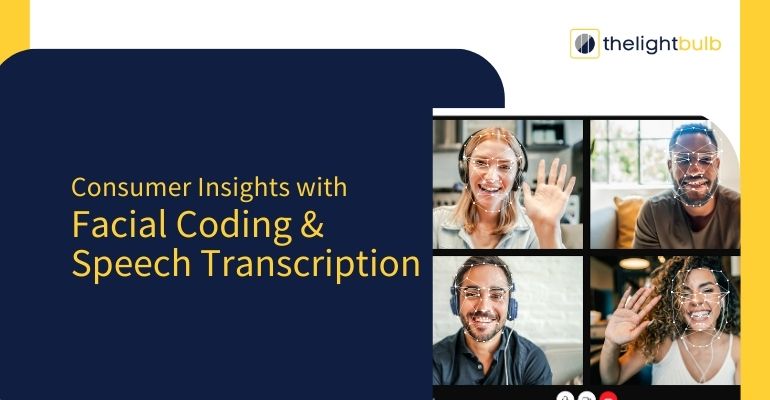
- Record with consent. Facial coding captures visible response; eye tracking, where available, captures gaze.
- Ask for a choice. Participants pick a product or rank options, which provides behavioural evidence.
- Collect reasons. Participants explain their choice in their own words, analysed with transcription and sentiment tools.
- Align the evidence. Researchers map responses to the attributes on screen at each moment, and compare chosen with rejected options.
The output is a picture of which attributes drew attention, which coincided with visible response, and whether those patterns differ between people who chose a product and people who didn’t.
What can brands learn from these studies?
Brands can learn which attributes deserve more prominence, which create hesitation and where stated reasons differ from observed behaviour.
Realistic findings look like this:
- A benefit claim draws early gaze and visible positive response, but participants rarely mention it. It may be working below the level of stated reasons.
- The price reveal coincides with visible hesitation among those who later reject the product, but not among those who choose it.
- Ratings badges get attention but show little visible response, suggesting they are checked rather than felt.
- Participants say they chose on price, yet gaze shows they spent most time on imagery.
Each finding is a lead for the next decision: test a new claim position, reframe the price or adjust imagery, then re-test.
Where in the buying journey can this research be used?
This research can be used at any point where shoppers evaluate options.
- Advertising, where purchase interest often begins. See Emotion AI in advertising testing.
- Concepts and new products, before launch. See concept testing before a product launch.
- Packaging and shelf, where choices are often made in seconds. See Emotion AI in packaging research.
- Product pages and checkout, where friction can stop a sale. See spotting user frustration in website and app testing.
- Product demos, where features are shown in sequence. See analysing reactions during product tests.
Can Emotion AI predict whether someone will buy?
No. Emotion AI cannot predict an individual’s purchase decision with certainty.
There are three reasons. First, facial expressions are not reliable readouts of internal states. A 2019 review led by Lisa Feldman Barrett found that facial movements vary across people, contexts and cultures, so a given expression cannot be read as a specific feeling. Second, purchase decisions depend on budget, need, timing and availability, none of which appear on a face. Third, a research task is not a real shop.
What Emotion AI can do is show group-level patterns: which attributes coincided with stronger responses and attention among people who made a particular choice. That is valuable evidence for design and messaging, provided it is not mistaken for a prediction.
It also helps to keep engagement separate from intent. Someone can be highly engaged and still not buy, a distinction covered in engagement signals in research.
How should brands combine emotional and stated data?
Brands should treat stated reasons, observed responses and actual choices as three separate lines of evidence, then look for where they agree and differ.
| Evidence | What it contributes |
| Stated reasons | Why participants believe they chose |
| Observed response and gaze | What drew attention and visible reaction during evaluation |
| Choice behaviour | What they actually picked |
When all three align, the finding is strong. When stated reasons and observed patterns diverge, the brand has a question worth exploring, as discussed in how Emotion AI compares with surveys and reactions that surveys often miss.
How does TheLightbulb.ai support purchase-related research?
TheLightbulb.ai combines facial coding, eye tracking, speech transcription, text sentiment and surveys, according to its website. That combination lets researchers compare observed response with stated reasons inside the same study.
Insights Pro Quantitative includes customer journey testing for online shopping experiences and creative testing of packaging or shelf designs, both relevant to purchase research. Insights Pro Qualitative supports deeper discussion of choices in focus groups and interviews.
Conclusion
Emotion AI helps brands identify the emotional triggers behind purchase decisions by showing which moments in an evaluation drew attention and visible response, and how those moments differ between people who chose and people who didn’t.
It does not read buyers’ minds or forecast individual purchases. Its value lies in giving brands a more complete, time-stamped view of evaluation to set beside stated reasons and real choices. That fuller picture leads to clearer claims, better-placed prices and packs that earn a second look.
Frequently asked questions
Can Emotion AI tell why a customer bought a product?
No. It shows what drew attention and visible response during evaluation. Reasons come from asking participants, and choices from observing what they pick.
What is an example of an emotional trigger in marketing research?
A benefit claim on a pack that draws early gaze and visible positive response from many participants is a candidate trigger worth testing further.
Is emotional response more important than price?
No, not as a rule. Price, need and context often dominate. Emotional and attention data help show how price and other attributes are experienced during evaluation.
Can this research be done online?
Yes. Webcam-based studies can test product listings, virtual shelves, offers and checkout flows with participants’ consent.
How do brands act on purchase-trigger findings?
By changing one element at a time, such as claim position or price framing, and re-testing to see whether attention, response and choice patterns shift.