
Blog
What Can AI Market Research Help Businesses Discover? 9 Hidden Insights (2026)
AI market research helps businesses discover true emotional reactions, emotional triggers in ads, attention gaps, customer journey friction, hidden preferences, response bias, emerging trends, meaningful outliers and competitor gaps. Traditional surveys and
Read More
Latest from our resources

What Is AI Market Research? Meaning, How It Works & Benefits (2026)
AI market research is the use of artificial intelligence, including machine learning, natural language processing (NLP) and Emotion AI, to collect, analyse …

How AI Eye Tracking Can Help Businesses Make Better Marketing Decisions
Traditional market research has a systemic blind spot. For decades, brands have relied on what consumers say they do through focus groups, …
AI Eye Tracking for Market Research: Understanding What Consumers Actually Do
Traditional market research has long relied on focus groups, feedback surveys, and self-reported questionnaires. While these methods have anchored brand strategy for …

Eye Tracking for B2B Customer Journey Research: Understanding How Buyers Navigate Digital Experiences
Unlike fast-moving B2C retail transactions, B2B enterprise sales cycles involve multi-stakeholder committees, lengthy evaluation periods, and complex technical documentation. Yet, B2B marketers …
AI Eye Tracking for Customer Journey Research: Find Where Customers Lose Attention
Modern consumer journeys are rarely linear. Today’s buyers hop seamlessly across social media feeds, programmatic video ads, landing pages, and mobile checkout …
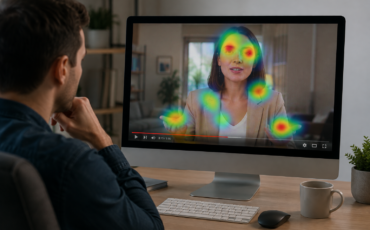
AI Eye Tracking for Video Ads: Measure What Viewers Actually Notice
Video advertising dominates modern marketing budgets, commanding billions of dollars across social media feeds, connected TV (CTV) networks, and programmatic channels. Yet, …

Why Users Don’t Notice Your CTA: Using Eye Tracking to Improve Website Conversion
High-traffic landing pages and digital portals frequently suffer from a frustrating paradox: steady visitor influxes paired with stagnant conversion rates. Marketing teams …
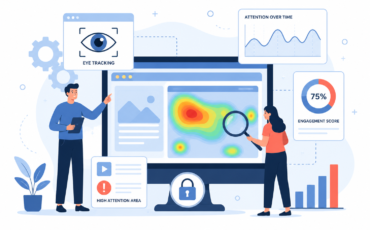
Are People Seeing Your Brand in Your Ads? How Eye Tracking Measures Brand Visibility
Millions of dollars are poured into creative production and media placements annually, yet countless campaigns suffer from “brand blindness” where viewers notice …
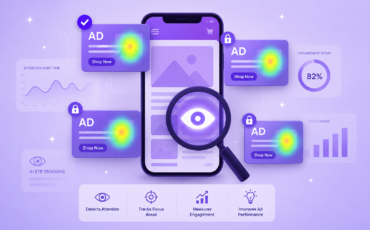
AI Eye Tracking for Advertising: How to Measure What People Actually Notice in Your Ads
In today’s hyper-competitive digital ecosystem, consumers are bombarded with thousands of brand messages daily. From social media feeds and programmatic display banners …