
Eye Tracking AI for Ad Testing: Measure Visual Attention Before Launching Your Campaign
The biggest risk in advertising isn’t a bad idea it’s a good idea that never actually gets seen. A brand cue placed in the wrong spot, a CTA buried under a busy background, a hero shot that arrives half a second too late for a six-second skippable ad these are attention failures, and by the time a campaign is live and media spend is out the door, they’re expensive to fix. Eye tracking AI lets ad testing catch these problems before launch, by measuring exactly where viewer attention goes, frame by frame or element by element, instead of relying on stated opinion alone.
Why Traditional Ad Pre-Testing Falls Short
Most conventional ad testing methods surveys, panel ratings, focus group discussion ask viewers to reflect on an ad after watching it. That reflection is filtered through memory, social desirability, and each respondent’s ability to articulate what they actually experienced. It’s useful for gauging opinion and message recall, but it says very little about the raw, moment-to-moment visual behavior that happened while the ad was playing.
This is the gap eye tracking AI closes. Instead of asking “did you notice the logo,” it shows, second by second, whether the logo was actually looked at, for how long, and whether it competed for attention with other elements on screen.
This matters most in the moments where a campaign has the least margin for error the opening seconds of a skippable video, a single static frame in a social feed, or a six-second bumper ad where there’s no time for a message to build gradually. In these formats, the difference between a viewer noticing the brand and scrolling past it can come down to a placement decision measured in pixels and milliseconds, which is precisely the level of detail stated opinion and post-hoc recall are least equipped to evaluate.
This article is part of a broader series for the full picture of how eye tracking AI works across market research, see the complete guide to eye tracking AI in market research.
What Eye Tracking AI Measures in an Ad Test
When applied to ad testing, eye tracking AI typically captures several attention metrics researchers can act on directly:
- Time to first fixation on key brand elements logo, product, tagline
- Total attention share each element receives across the ad’s runtime
- Heatmap overlays showing where gaze concentrated at any given moment
- Attention drop-off points the exact second viewers stop engaging visually
- Comparative attention between two or more creative versions, for A/B-style testing
These metrics turn creative evaluation from a subjective discussion into a measurable comparison, which is especially valuable when a brand is deciding between multiple cuts, thumbnails, or versions of the same campaign.
Catching Problems Before Media Spend Goes Out
The real value of pre-launch eye tracking AI testing is timing. Once a campaign airs, attention data can only explain what already happened after the budget is spent. Testing before launch means creative and media teams can still make changes: repositioning a logo, extending the time a key message stays on screen, or trimming a section that consistently loses viewer attention.
This is particularly relevant for ad testing and broader creative testing workflows, where eye tracking AI is used alongside other quantitative signals to validate a creative concept before it becomes a live campaign.
Beyond Attention: Adding Emotional Context
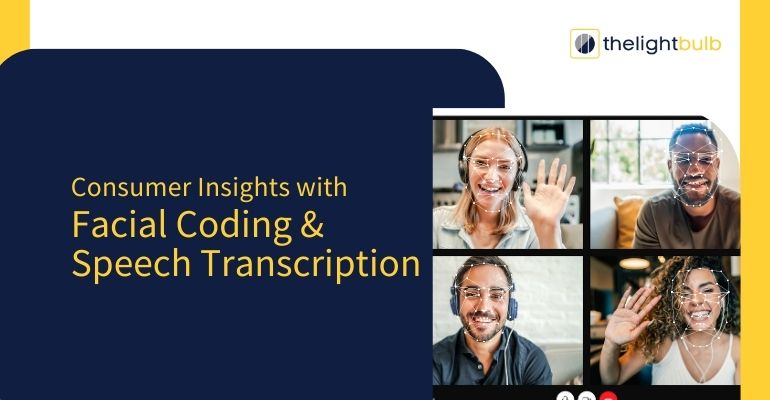
Knowing where attention went is only half the picture a viewer might look directly at a product and feel nothing, or glance briefly at a message and feel a strong reaction. Layering emotion AI and facial coding onto eye tracking data connects visual attention with emotional response in the same moment, showing not just what was seen, but what actually landed emotionally. For ad testing specifically, this combination helps distinguish between creative that’s merely noticed and creative that’s genuinely persuasive.
Ad Testing Use Cases Where Eye Tracking AI Adds the Most Value
- Choosing between creative concepts before committing media budget to one direction
- Optimizing the first few seconds of skippable digital video, where attention is most fragile
- Validating logo and brand placement across static and video formats
- Comparing thumbnail or key-frame options for social and video platforms
- Testing localized or market-specific versions of the same campaign for attention differences across audiences
Reading an Attention Timeline: What a Strong Pattern Looks Like
Not every attention pattern is equally healthy for a piece of creative, and knowing what to look for makes the difference between a useful test and a confusing one.
A strong pattern typically shows attention arriving quickly on the brand or product within the first few seconds, holding through the key message, and only tapering off naturally toward the end once the message has landed. Secondary elements a CTA, a tagline, a product shot each register a meaningful share of attention rather than being visually crowded out.
A weak pattern often shows the opposite: attention scattering across competing elements early on, a slow or late arrival at the brand cue, or a sharp drop-off well before the key message or CTA appears on screen. In some cases, attention concentrates heavily on an unintended element background motion, a secondary character, or on-screen text pulling focus away from what the creative was actually meant to communicate.
Neither pattern is inherently “good” or “bad” in isolation; they need to be read against the specific creative objective. An ad meant purely to build broad brand awareness has different attention priorities than a direct-response ad built around a single, urgent CTA. This is why eye tracking AI results are most useful when interpreted against a clear creative brief, not as a generic pass/fail score.
How an Eye Tracking AI Ad Test Typically Runs
The process behind a pre-launch ad test follows a fairly consistent structure, regardless of format:
- Creative upload — the ad (or multiple versions of it) is loaded into the testing platform exactly as it would run in market.
- Panel recruitment — a sample matched to the campaign’s target audience views the creative through an online research panel.
- Webcam-based gaze capture — attention is recorded unobtrusively while respondents watch the ad under natural viewing conditions.
- Frame-level or element-level aggregation — individual gaze data is combined across the sample into attention timelines and heatmaps.
- Reporting against creative objectives — findings are interpreted against the specific question at hand, such as whether the logo earns attention within the first three seconds.
Because this runs through standard webcams rather than in-person lab sessions, results are typically available in days, which fits comfortably within most pre-launch creative timelines.
Common Mistakes Brands Make When Interpreting Ad Attention Data
Treating total attention as the only success metric. An ad can hold attention throughout its runtime and still fail if that attention never lands on the brand or the intended message where attention goes matters as much as how much of it there is.
Testing only the final cut. Attention data is most useful earlier in the process, when there’s still time to adjust pacing, element placement, or timing based on the findings testing only after the edit is locked limits how actionable the results can be.
Ignoring emotional context. A viewer can look directly at a product and feel nothing, or barely glance at a message and feel strongly about it. Attention data alone doesn’t capture that distinction pairing it with emotion AI does.
Conclusion
Ad testing built around eye tracking AI replaces assumption with evidence showing exactly where a campaign earns attention and where it loses it, while there’s still time to act on that insight. Paired with emotion AI, it gives creative and media teams a complete, pre-launch read on whether an ad is working the way it’s intended to, rather than discovering the answer only after the campaign has already gone live and the media budget has been spent.
To test your next campaign before it airs, request a demo of TheLightbulb.ai’s Insights Pro, or explore the complete guide to eye tracking AI in market research.
Frequently Asked Questions
How is eye tracking AI different from a standard ad recall survey?
A recall survey measures what viewers remember after the fact. Eye tracking AI measures what viewers actually looked at while the ad played, capturing attention behavior a survey can’t reconstruct.
Can eye tracking AI test video ads, not just static creative?
Yes it can track attention frame by frame across video content, showing exactly when and where viewer focus shifts throughout the ad’s runtime.
Is eye tracking AI ad testing only useful for large campaigns?
No. It’s equally useful for testing individual creative decisions a thumbnail, an opening frame, a CTA placement on a smaller scale before scaling a broader campaign.
Does eye tracking AI ad testing require a physical lab?
Not with modern AI-based tracking, which can run through a standard webcam, allowing tests to be conducted remotely across a distributed panel rather than requiring in-person lab sessions.
How many creative versions can be tested at once with eye tracking AI?
Most platforms support comparing two or more versions of a creative side by side, which is useful for choosing between cuts, thumbnails, or messaging directions before committing media budget to one option.
Is eye tracking AI ad testing suitable for social media and short-form video, not just TV commercials?
Yes it’s especially useful for short-form and skippable formats, where the first few seconds carry a disproportionate share of the attention a piece of creative will ever receive.
Should attention data be the only factor in deciding which creative version to launch?
No. Attention data is strongest as one input alongside emotional response, message recall, and stated preference a creative decision made on attention data alone risks missing whether the ad also resonated emotionally or communicated the intended message clearly.