AI Eye Tracking: The Complete Guide to Measuring Visual Attention for Better Business Decisions
In today’s digital economy, consumers are bombarded with thousands of brand messages daily. From social media feeds and high-octane video ads to intricate e-commerce interfaces and B2B SaaS portals, human visual real estate is the ultimate scarce commodity. Yet, traditional marketing metrics clicks, views, shares, and surface-level surveys only reveal what happened after the fact. They never explain why it happened or how attention was captured in the split-second moments that matter most.
Staring at a screen does not mean paying attention. Standard self-reported surveys notoriously suffer from recall bias, social desirability effects, and post-rationalization. Respondents try to be helpful or logical, forgetting how they actually felt or what they initially looked at during the first critical milliseconds of exposure.
This disconnect has driven a massive strategic shift toward AI eye tracking. By harnessing webcam-based computer vision and deep learning, modern brands can capture visual attention and unstated emotional responses at true online scale all without requiring cumbersome hardware, awkward glasses, physical labs, or high-friction setups.
By leveraging AI-powered visual attention and emotion measurement, brands can decode subconscious consumer responses, eliminate guesswork, and make high-stakes business decisions backed by research-grade data. Whether you are optimizing a high-budget digital campaign, troubleshooting a low-converting landing page, or mapping a complex omnichannel customer journey, understanding visual attention is the ultimate competitive advantage.
What Is AI Eye Tracking and How Does It Measure Consumer Attention?
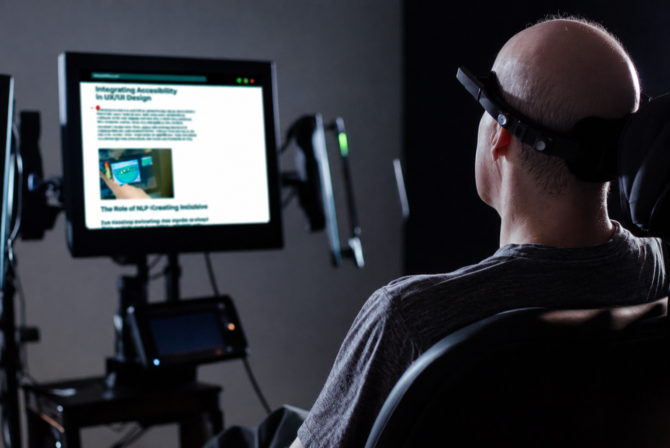
To understand the modern landscape of visual metrics, we must first move beyond legacy hardware eye-trackers. Traditional eye tracking required physical chin rests, infrared table-mounted devices, or bulky wearable glasses. These constraints limited research to small, artificial lab environments with skewed participant demographics.
AI eye tracking replaces physical infrared hardware with advanced deep learning models, computer vision algorithms, and standard webcams. Through remote, webcam-based software, the technology maps facial landmarks, estimates head pose, and tracks gaze direction with remarkable accuracy.
The Science of Gaze: Fixations, Saccades, and Heatmaps
When human eyes interact with digital stimuli, they do not glide smoothly across the screen. Instead, they move in rapid jumps called saccades, interspersed with pauses known as fixations where the brain actually processes visual information.
- Fixations: Reveal where visual interest settles and how long a consumer lingers on an element (such as a headline, product image, or pricing table).
- Saccades: Indicate the path of visual discovery and how easily the eye moves from one element to the next.
- Visual Heatmaps: Aggregate gaze data across user cohorts to instantly highlight hot zones (high attention) and blind spots (zero engagement).
Beyond Gaze: The Emotion AI Connection
Gaze alone tells you where someone looked, but it doesn’t tell you how they felt about it. Did they look at a prominent logo because they loved the brand, or because the design was jarring and confusing?
Platforms like TheLightbulb.ai bridge this gap by combining visual attention tracking with unstated, non-verbal emotional responses. By reading micro-expressions and facial muscle movements in real time, Emotion AI provides a complete picture of cognitive load, valence, and arousal.
The Online Scale Advantage
Because this technology operates entirely through web browsers using standard consumer webcams, market researchers and enterprise brands are no longer restricted by lab capacity. You can test a creative concept across thousands of global respondents in hours rather than weeks, capturing authentic behavior in natural home environments.
Decoding Visual Attention Across Formats & Channels
Visual attention is not uniform; it behaves differently depending on whether a consumer is watching a 15-second video ad, scrolling an e-commerce feed, or navigating a dense software platform. Let us examine how AI eye tracking transforms optimization across major digital channels.
A. Advertising & Brand Visibility
Ad Testing: Measuring What People Actually Notice
In digital advertising, the first three seconds dictate whether an ad succeeds or gets scrolled past. Traditional pre-testing relies on asking users after the fact: “Do you remember this ad?” This approach fails because memory is heavily biased.
With AI eye tracking for advertising, brands measure subconscious attention in real time. You can see precisely which hook captures initial gaze, whether viewers drop off during the middle sequence, and if the core value proposition registers before the skip button is pressed.
Brand Salience: Are People Actually Seeing Your Logo?
A common pitfall in creative design is burying the brand logo in a low-visibility corner or blending it into a busy background. Brands spend millions on media placements only to discover through attention heatmaps that viewers’ eyes never once registered the brand identifier.
Using gaze analytics ensures your brand salience is optimized. By tracking visual flow, you can restructure ad composition so that logo recall, product placement, and key messaging align with natural human viewing patterns.
B. Digital Experiences & Conversion Optimization
CTA Blindness: Why Users Miss High-Value Actions
Have you ever wondered why conversion rates flatline despite steady web traffic? The culprit is often CTA blindness. Users have developed sophisticated mental filters that allow them to bypass standard banner placements and generic call-to-action buttons.
By integrating eye tracking to improve website conversion, UX designers can analyze exact interaction patterns on landing pages, pricing grids, and checkout flows. Heatmaps reveal whether your primary “Buy Now” or “Start Free Trial” button commands immediate visual priority or if competing visual clutter is hijacking user attention.
C. Video Content Optimization
Dynamic Attention in Video Ads
Video storytelling requires precise pacing. A single dull transition or an unengaging middle frame can cause viewer attention to plummet permanently.
AI eye tracking for video ads delivers second-by-second attention curves. Instead of relying on aggregate completion rates, marketers can isolate exact timestamps where gaze engagement spikes or drops, allowing editors to tighten narrative arcs, optimize product placement frames, and eliminate dead air.
Mapping the Complete Customer Journey: From B2C to B2B
Consumer behavior is rarely linear. Modern buyers hop across mobile apps, social ads, search engines, and multi-page web portals before making a decision. Capturing attention across this intricate web requires holistic journey mapping.
A. B2C Customer Journey Research
In fast-moving consumer sectors (such as retail, e-commerce, and fast-moving consumer goods), brand loyalty is fragile. Customer journey attention research allows brands to pinpoint friction points across omnichannel touchpoints—from initial product discovery on social media to final checkout on mobile apps. By identifying where visual fatigue sets in, brands can streamline navigation and reduce cart abandonment.
B. B2B Buyer Journeys & Digital Experiences
B2B buyers operate under a completely different psychological framework compared to B2C consumers. They navigate complex SaaS portals, dense product comparison pages, whitepapers, and long-form technical documentation.
Understanding how B2B buyers navigate digital experiences helps enterprise companies optimize information hierarchy. By tracking how evaluators parse feature lists, pricing models, and case studies, B2B marketers can remove cognitive friction and accelerate lengthy sales cycles.
Revolutionizing Market Research & Strategic Business Decisions
The market research industry has undergone a radical transformation. Traditional focus groups and self-reported surveys are increasingly recognized as vulnerable to peer pressure, facilitator bias, and rationalized feedback.
Modernizing Market Research with Emotion AI
By embracing AI eye tracking for market research, researchers capture unstated human behavior at scale. Rather than asking respondents what they think they felt, technology measures micro-expressions and visual focus directly.
Industry leaders and global research agencies—such as Nielsen Media, Kantar, and NIQ—increasingly rely on remote behavioral technologies to complement traditional methodologies. This integration brings objective, research-grade precision to consumer insights without sacrificing sample size or speed.
Empowering Smarter Marketing Decisions
Data is only valuable if it drives action. When executive leadership faces high-stakes decisions—such as rebranding a legacy product, launching a multi-million-dollar global campaign, or redesigning a flagship e-commerce platform guessing is no longer an option.
Forward-thinking brands like Amazon, Myntra, Swiggy, Godrej, and Vivo utilize deep consumer insights derived from webcam-based attention platforms to optimize campaigns before heavy media spend occurs. As highlighted by industry accolades such as the MarTech Startup of the Year (BrandWagon) and the MRSI Golden Key Awards, combining visual attention data with Emotion AI turns subjective creative debates into objective, data-backed strategies.
Conclusion & The Future of Emotion AI
Visual attention is no longer a mysterious black box. By shifting from legacy hardware labs to scalable, webcam-based software, businesses can decode what consumers actually look at and feel with research-grade accuracy.
As the digital landscape grows increasingly crowded, the brands that win will be those that master subconscious engagement—eliminating guesswork, optimizing user experiences, and aligning creative strategies with natural human behavior.
Ready to transform how your brand measures consumer attention? Discover how TheLightbulb.ai turns webcam-based emotion and attention tracking into your ultimate competitive advantage. Explore our Heureka podcast, browse our latest case studies, or book a demo today.
Frequently Asked Questions (FAQs)
1. What is AI eye tracking, and how does it work without special hardware?
AI eye tracking uses advanced computer vision and deep learning models running in standard web browsers. By analyzing facial landmarks, head orientation, and gaze vectors via a standard user webcam, the software maps visual fixations and heatmaps without requiring infrared equipment, glasses, or physical labs.
2. How accurate is webcam-based eye tracking compared to traditional lab hardware?
Modern remote AI eye tracking achieves high-precision calibration that correlates strongly with traditional laboratory equipment. Because it operates at online scale across thousands of diverse participants in natural home settings, it offers superior ecological validity compared to small, artificial lab samples.
3. Can AI eye tracking also measure emotional response?
Yes. Platforms like TheLightbulb.ai combine visual attention metrics (gaze paths and fixations) with Emotion AI, which analyzes unstated, non-verbal facial micro-expressions to gauge genuine emotional valence and engagement in real time.
4. What types of businesses benefit most from visual attention data?
Enterprise brands, market research agencies, digital advertisers, UI/UX designers, e-commerce platforms, and B2B SaaS companies use eye tracking to optimize ad creatives, website conversion paths, video content, and complete customer journeys.
5. How does TheLightbulb.ai protect respondent privacy?
The platform operates with strict adherence to global privacy standards (such as GDPR and CCPA). Video streams are processed securely in real time for behavioral analytics without storing identifiable personal facial recordings against consumer privacy regulations.