Eye Tracking AI in Market Research: The Complete Guide to Understanding Consumer Attention and Decision-Making in 2026
Consumers don’t tell you everything with words. Long before someone clicks “buy,” fills out a survey, or says what they liked about an ad, their eyes have already revealed it what caught their attention, what they skipped past, and what held their gaze just a second longer. That’s the layer of behavior eye tracking AI is built to capture.
In 2026, as research teams lean harder on AI to understand real, unfiltered consumer behavior, eye tracking AI has moved from a niche lab technique to a mainstream market research tool. This guide breaks down what it is, how it works, and how it’s being used across ad testing, UX research, packaging, video creative, and more so you can decide where it fits into your own research strategy.
What Is Eye Tracking AI and How Does It Work in Market Research?
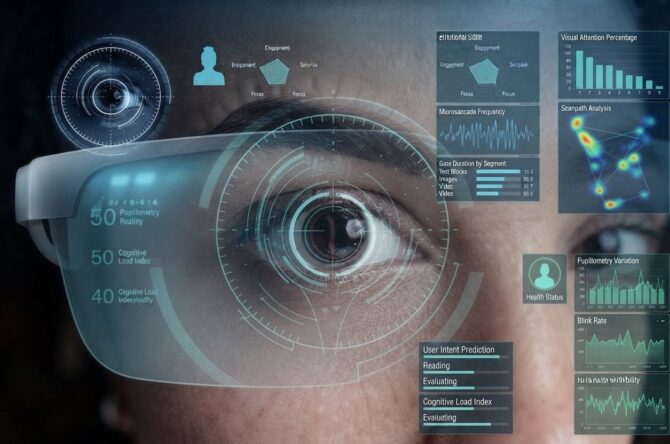
Eye tracking AI is technology that uses computer vision to follow where a person’s gaze lands, for how long, and in what sequence, then converts that gaze data into heatmaps and attention metrics researchers can analyze. Unlike traditional dedicated eye-tracking hardware, AI-powered eye tracking can run through a standard webcam, making it possible to collect attention data at scale across large, geographically spread panels instead of one respondent at a time in a lab.
In market research, this attention data answers a question surveys can’t: not what people say they noticed, but what they actually looked at first, longest, and last.
How Eye Tracking AI Reveals What Consumers Actually Notice Before They Buy
Purchase decisions are shaped by what enters a shopper’s field of attention in the first few seconds a logo, a price tag, a claim on a pack, a product image. Eye tracking AI maps this sequence directly, showing researchers the actual path of attention rather than a respondent’s after-the-fact recollection of it, which is often incomplete or reconstructed.
This matters because stated recall and actual visual behavior frequently diverge people notice things they never mention, and claim to notice things they never looked at. Attention heatmaps close that gap, giving brand and insights teams a factual record of what genuinely registers before a purchase decision is made. Read the full breakdown in How Eye Tracking AI Reveals What Consumers Actually Notice Before They Buy.
Eye Tracking AI for Ad Testing: Measure Visual Attention Before Launching Your Campaign
Before a campaign goes live, ad testing with eye tracking AI shows exactly where viewer attention lands on every frame the logo, the key message, the call to action and where it’s lost. This is especially valuable for identifying whether a hero product or brand cue is actually being seen, or whether it’s getting buried under competing visual elements.
Combined with quantitative testing methodologies like creative and ad testing, eye tracking AI lets teams pressure-test creative before media spend goes out the door, rather than optimizing after the campaign has already run. For the full walkthrough, see Eye Tracking AI for Ad Testing: Measure Visual Attention Before Launching Your Campaign.
Beyond Surveys: How Eye Tracking AI Strengthens UX Research
Surveys are good at capturing opinions; they’re weaker at capturing behavior. A user can say a website “felt easy to use” while their gaze data shows they hunted for the navigation menu for several seconds. Eye tracking AI adds this missing behavioral layer to UX testing, showing researchers precisely where users look, where they hesitate, and where their attention drops off entirely.
For UX and product teams, this turns subjective usability feedback into an observable, evidence-based diagnosis of friction points. Explore this further in How Eye Tracking AI Improves UX Research Without Relying Only on Surveys.
Eye Tracking AI + Emotion AI: A Better Way to Understand Customer Reactions
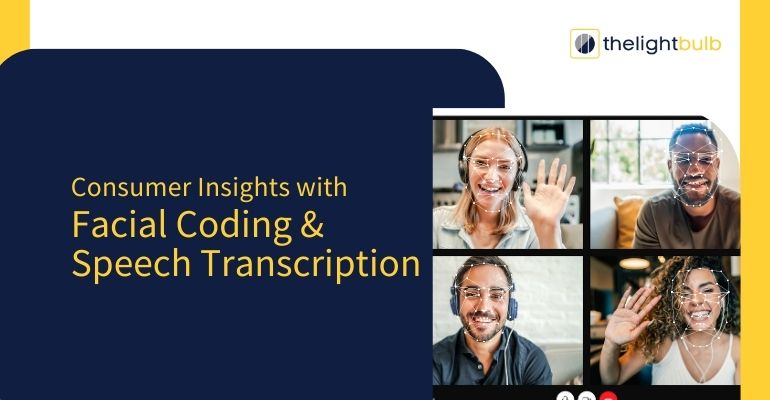
Attention alone doesn’t tell you how someone felt about what they saw. Pairing eye tracking AI with facial coding and emotion AI connects where someone looked with how they reacted in that same moment — did attention on a price point trigger hesitation, or did a product shot trigger genuine interest? Together, gaze and emotion data build a far more complete, unstated picture of customer response than either signal alone. Read the full comparison in Eye Tracking AI + Emotion AI: A Better Way to Understand Customer Reactions.
Eye Tracking AI for Product Packaging Research: What Shoppers Look at First
On a shelf physical or digital a shopper’s attention is won or lost in seconds. Eye tracking AI shows exactly which pack element earns that first glance: the brand name, the color block, a claim, or the product image, and in what order. This helps packaging and brand teams understand whether their design hierarchy is actually working as intended, well before print or launch, rather than relying on stated preference alone. See the full guide: Eye Tracking AI for Product Packaging Research: What Shoppers Look at First.
How Eye Tracking AI Helps Brands Optimise Website and App Experiences
Applied to digital experiences, eye tracking AI reveals how attention moves across a webpage or app screen what’s seen above the fold, which CTAs actually get noticed, and where visual clutter causes users to miss key information. Layered with customer journey testing, it gives product and digital teams a attention-based, evidence-driven way to prioritize design and layout changes instead of relying on assumptions. Full breakdown here: How Eye Tracking AI Helps Brands Optimise Website and App Experiences.
Eye Tracking AI for Video and Creative Testing: Understanding Viewer Attention Frame by Frame
Video is harder to test than static creative because attention shifts constantly as the content moves. Eye tracking AI tracks this shift frame by frame, showing whether viewers are looking at the product, the talent, on-screen text, or drifting away entirely at specific timestamps. For trailer and long-form creative testing, this frame-level view helps editing and creative teams pinpoint the exact moments a video gains or loses viewer attention. Read the full guide: Eye Tracking AI for Video and Creative Testing: Understanding Viewer Attention Frame by Frame.
From Gaze to Insights: How Eye Tracking AI Supports Smarter Consumer Research
On its own, gaze data is just coordinates and timestamps. Its research value comes from turning that raw data into insight aggregating attention patterns across a panel, layering in generative AI summarization, and connecting attention metrics back to business questions like purchase intent, brand recall, or usability. This is where eye tracking AI moves from an interesting behavioral signal to a decision-support tool that consumer insights, UX, and brand teams can act on directly. Go deeper in From Gaze to Insights: How Eye Tracking AI Supports Smarter Consumer Research.
Choosing the Right Eye Tracking AI Platform: Features Every Research Team Should Evaluate
Not all eye tracking AI platforms are built the same. When evaluating one, research teams should look for:
- Webcam-based, scalable data collection — so studies aren’t limited to small in-lab samples
- Combined technology stack — eye tracking alongside facial coding, speech transcription, and text sentiment for a fuller behavioral picture
- Fast, accurate heatmap and attention analytics — with minimal manual processing
- Generative AI-powered synthesis — for turning raw attention data into themes and summaries quickly
- Proven use across ad, UX, packaging, and creative testing — not a single-use-case tool
- Global panel access and vendor track record — evidenced by real client work and industry recognition, not just marketing claims
TheLightbulb.ai’s Insights Pro Quant and Insights Pro Qual platforms are built around this exact stack, combining eye tracking with facial coding, speech transcription, text sentiment, and generative AI and have been used by research and brand teams including Nielsen, Amazon, Myntra, and Kantar, and recognized with awards such as MarTech Startup of the Year (2024) and a finalist placement at ESOMAR’s YES Awards. See the full buyer’s checklist in Choosing the Right Eye Tracking AI Platform: Features Every Research Team Should Evaluate.
Conclusion
Eye tracking AI has become one of the most reliable ways to understand what consumers actually notice closing the gap between what people say and what they do. Whether it’s applied to ads, UX, packaging, websites, or video creative, the throughline is the same: attention data turns guesswork into evidence.
If you’re evaluating eye tracking AI for your next research project, request a demo of TheLightbulb.ai’s Insights Pro or talk to the team to see how eye tracking, emotion AI, and generative AI summarization work together in one platform.
Frequently Asked Questions
What is eye tracking AI in market research?
Eye tracking AI uses computer vision, often through a standard webcam, to track where a person looks, for how long, and in what order turning that gaze data into heatmaps and attention metrics that reveal real consumer behavior, not just stated opinions.
How accurate is eye tracking AI compared to traditional surveys?
Surveys capture what people remember or choose to report, which can differ from what actually caught their attention. Eye tracking AI records visual behavior directly as it happens, making it a strong complement to not necessarily a full replacement for survey-based research.
Can eye tracking AI be combined with emotion AI?
Yes. Pairing eye tracking with facial coding and emotion AI shows not just where attention went, but how the person felt in that moment, giving researchers a fuller, unstated view of consumer reaction.
Which industries use eye tracking AI most in research?
It’s widely used in advertising and creative testing, UX and product design, retail and packaging, e-learning, and consumer goods anywhere understanding real visual attention informs a business or design decision.
What should I look for when choosing an eye tracking AI platform?
Prioritize webcam-based scalability, an integrated stack (eye tracking plus emotion AI, speech, and text sentiment), fast AI-powered analysis, and a proven track record across multiple research use cases.